

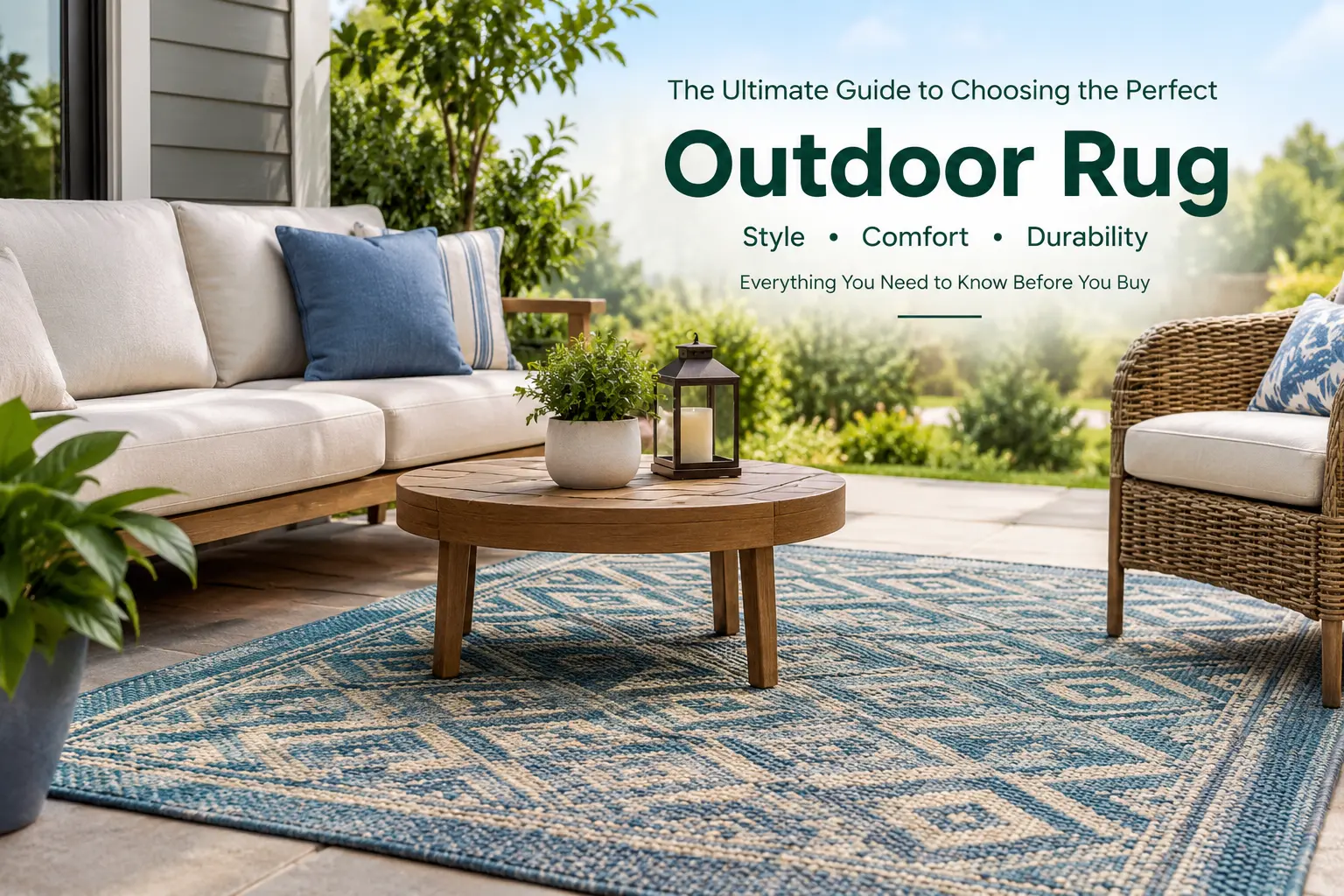
An outdoor rug can make a patio, balcony, porch, or garden seating area feel more comfortable and inviting. It adds color, creates a visual boundary around furniture, and helps connect outdoor decorations into one coordinated design. However, choosing the right rug involves more than selecting a pattern you like. You also need to consider the weather, material, size, texture, cleaning requirements, and the surface where you plan to place it.
The best outdoor rug for a covered balcony may not be the right choice for an uncovered patio exposed to rain and direct sunlight. Similarly, a rug placed under an outdoor dining table needs different features from one used to decorate a quiet reading corner.
This guide explains how to choose outdoor rugs, compare common materials, select the right size, coordinate colors, maintain your purchase, and avoid common buying mistakes. Whether you want a small outdoor rug for a balcony or a large outdoor area rug for a spacious deck, the following advice will help you make a more informed decision.
What Is an Outdoor Rug?
An outdoor rug is a floor covering designed for use in exterior or partly sheltered spaces. Manufacturers commonly make these rugs from synthetic fibers, woven plastic materials, or selected natural fibers. The intended construction determines how well a particular rug handles moisture, sunlight, dirt, and regular foot traffic.
Unlike a traditional indoor rug, an outdoor rug is often designed to dry more easily, resist stains, or maintain its appearance in changing conditions. However, not every rug sold for outdoor use is completely waterproof, mold-proof, or suitable for continuous exposure to rain.
Outdoor rugs come in rectangular, square, round, oval, and runner shapes. They also feature a wide range of colors, from simple beige and gray to bold blue, green, red, and multicolored patterns.
You can use an outdoor rug in several places:
- Under a patio dining table.
- In an outdoor living room with sofas and chairs.
- On a covered porch or veranda.
- On a balcony with compact furniture.
- Beneath a pergola or gazebo.
- In an RV or camping setup when the product is designed for that purpose.
- In a garden seating area with a suitable, well-drained surface.
The important point is to match the rug’s construction and care requirements to its intended location.
Why Should You Use an Outdoor Rug?
An outdoor rug can improve both the appearance and everyday use of an exterior living area. Its benefits depend on the product, the surface beneath it, and the environment where you place it.
1. Create a Comfortable Seating Area
Outdoor furniture can sometimes look scattered across a large patio or deck. A rug helps visually connect chairs, tables, and sofas. It establishes a clear area for conversation, reading, dining, or relaxing.
For example, placing a rectangular outdoor area rug beneath a small sofa and two chairs creates a more unified arrangement. The rug gives the furniture grouping a defined footprint without requiring walls or permanent dividers.
2. Add Color and Personality
Outdoor spaces often contain neutral flooring, wooden furniture, concrete surfaces, or metal railings. A patterned rug introduces color and texture without requiring a major renovation.
A blue outdoor rug can complement coastal-inspired decor. A beige rug works well with natural wood and neutral cushions. Geometric patterns can create a modern appearance, while floral designs can suit traditional gardens.
3. Help Define Different Zones
Large patios often serve several purposes. One section may contain a dining table, while another holds lounge chairs. Separate rugs can visually distinguish these areas.
Use one appropriately sized rug beneath the dining set and another beneath the lounge furniture if the patio is large enough. Leave sufficient space between the zones so the layout remains practical.
4. Improve the Feel Underfoot
A suitable rug can provide a more pleasant surface than bare concrete or some hard decking materials. The actual comfort depends on its thickness, weave, backing, and the surface beneath it.
For frequently used outdoor spaces, choose a product that feels comfortable while still allowing appropriate drainage and drying.
5. Support a Coordinated Design
An outdoor rug can connect different design elements. You can repeat one or two colors from your cushions, planters, outdoor curtains, or furniture to create a consistent appearance.
You do not need to match every color exactly. Instead, choose a rug that complements the existing palette and adds a little contrast where needed.
Types of Outdoor Rugs
Outdoor rugs vary in material, weave, shape, and intended use. Understanding these differences makes it easier to choose a product that fits your lifestyle.
Synthetic Outdoor Rugs
Synthetic outdoor rugs use manufactured fibers such as polypropylene, polyester, or nylon. These products are common choices for patios, decks, and other areas where easy maintenance matters.
Their performance is not identical. Some offer stronger moisture resistance, while others emphasize color retention, texture, or durability under foot traffic.
Before buying, read the product specifications and confirm whether the rug is suitable for uncovered use.
Recycled Plastic Outdoor Rugs
Some outdoor rugs use recycled plastic fibers, including recycled polyethylene or polyester. They can offer an alternative to products made entirely from newly manufactured materials.
These rugs may be woven into flat, colorful surfaces that are relatively easy to move and clean. They can work well in balconies, camping areas, and casual outdoor seating spaces.
Check the manufacturer’s information to understand the actual recycled content. A recycled-material label alone does not establish that a product is fully recyclable at the end of its life.
Natural-Fiber and Natural-Look Rugs
Jute, sisal, seagrass, and other natural fibers create an organic appearance. Their woven texture can complement timber decking, terracotta planters, and neutral furniture.
However, natural fibers generally need more protection from prolonged moisture than many synthetic outdoor materials. Some products marketed as natural-look rugs use synthetic fibers instead, so check the label carefully.
For a genuinely natural-fiber rug, a covered porch or sheltered balcony is usually a more suitable location than an uncovered garden exposed to repeated rain.
Indoor-Outdoor Rugs
An indoor outdoor rug is designed to be versatile enough for indoor and exterior spaces. Many use durable synthetic fibers that are relatively easy to clean.
You might use one in a sunroom, enclosed porch, covered balcony, or mudroom. Always check the product’s intended applications because indoor-outdoor labeling does not mean every model can withstand every outdoor condition.
Outdoor Runner Rugs
An outdoor runner is a long, narrow rug suited to walkways, narrow balconies, side entrances, and covered porches.
Measure the available floor space before buying. Leave enough exposed flooring around the runner to make the walkway look balanced and to avoid interfering with doors or furniture.
Best Outdoor Rug Materials: Which One Should You Choose?
Material is one of the most important factors when choosing an outdoor rug. It influences how the rug handles rain, stains, sunlight, foot traffic, and cleaning.
Polypropylene Outdoor Rugs
Polypropylene is a common synthetic material used in outdoor rugs. Many polypropylene products resist stains and moisture and are easy to maintain.
This material is often a practical choice for patios, family seating areas, and outdoor dining spaces where dirt or spills are likely.
Advantages:
- Many products are easy to clean.
- Suitable constructions can resist moisture and stains.
- Available in numerous colors and patterns.
- Often practical for busy outdoor spaces.
- Can offer good value for regular use.
Limitations:
- Performance varies with construction and backing.
- Some products may become hot in direct sunlight.
- Synthetic fibers can be damaged by excessive heat.
- The underside may retain moisture if the rug rests on a poorly drained surface.
Polypropylene is a useful starting point if you want a low-maintenance outdoor rug. Still, check the manufacturer’s guidance on sunlight, rain exposure, and cleaning.
Polyester Outdoor Rugs
Polyester rugs offer a broad range of colors, patterns, and textures. Some products provide good color retention and a soft feel underfoot.
They may suit sunny seating areas or decorative patios, depending on the specific construction and UV-resistance rating.
Advantages:
- Available in many designs.
- Can provide strong color options.
- Often feels comfortable underfoot.
- Some versions resist fading well.
Limitations:
- Resistance to oil-based stains can vary.
- Not every polyester rug is designed for heavy rain.
- Cleaning methods depend on the fibers and backing.
Choose polyester when appearance and color are important, but confirm that the particular product is intended for the weather conditions in your area.
Nylon Outdoor Rugs
Nylon is known for its resilience in many carpet applications. Some outdoor-rated nylon rugs can work well in busy areas where durability and recovery from foot traffic are important.
However, nylon is not automatically suitable for uncovered outdoor use. Look for an explicit outdoor rating and information about moisture, sunlight, and backing.
Jute Outdoor Rugs
Jute rugs offer a natural, textured appearance. They can work with rustic, bohemian, farmhouse, and relaxed outdoor decor.
The main concern is moisture. Natural jute can absorb water, and prolonged dampness may encourage unpleasant odors, discoloration, or deterioration.
Use a genuine jute rug in a sheltered location only if its care instructions support that placement. If you like the appearance but need greater weather resistance, consider a synthetic rug with a jute-style weave.
Sisal and Seagrass Rugs
Sisal and seagrass provide distinctive natural textures. Their suitability for outdoor use depends on the specific fiber, construction, and backing.
Do not assume that every natural-fiber rug marketed for a porch can tolerate heavy rain. A covered, well-ventilated space is generally a safer choice for materials that absorb moisture.
Recycled Synthetic Fibers
Rugs made from recycled plastic or polyester can be practical options for people who want to consider material sourcing alongside durability.
Compare the product’s recycled-content claims, expected lifespan, cleaning requirements, and end-of-life options. A durable rug that lasts for years may be more useful than one that needs frequent replacement.
Material Comparison Table
| Material | Common strength | Main consideration | Suitable location |
|---|---|---|---|
| Polypropylene | Easy maintenance in many constructions | Confirm outdoor and UV rating | Patios and decks |
| Polyester | Color and design variety | Check stain and moisture performance | Suitable patios and sheltered areas |
| Nylon | Resilience in some constructions | Confirm exterior suitability | Rated outdoor high-traffic areas |
| Jute | Natural texture | Sensitive to prolonged moisture | Covered porch |
| Sisal | Distinctive woven appearance | Needs careful moisture management | Protected areas |
| Recycled synthetic fibers | Alternative material sourcing | Check recycled content and durability | Depends on product rating |
There is no single best material for every home. For an uncovered patio, prioritize a product designed for rain, UV exposure, and drainage. For a covered balcony, appearance and texture may play a larger role.
How to Choose the Right Outdoor Rug Size
The right size helps your outdoor furniture look balanced. A rug that is too small may appear disconnected from the furniture, while an oversized rug may crowd the available walking space.
Before ordering, measure the area and mark the proposed rug dimensions on the floor with painter’s tape or another temporary guide.
3×5 Outdoor Rug
A 3×5 outdoor rug can suit compact spaces, including small balconies, narrow seating corners, and areas beside an exterior door.
It may work beneath a small accent table or in a limited space where a larger rug would interfere with movement. It is generally too small to anchor a full outdoor sofa arrangement.
5×7 Outdoor Rug
A 5×7 outdoor rug can work in smaller patios or modest seating arrangements. It may accommodate a pair of chairs and a small table, depending on their dimensions.
Measure the furniture footprint rather than relying on the rug size alone. Check that chair legs remain on the rug when people pull the chairs out.
6×9 Outdoor Rug
A 6×9 rug can suit a medium-sized seating area. It offers more room to connect chairs, a coffee table, and a compact outdoor sofa.
This size may also work under a small dining arrangement, but confirm the dimensions of the table and chairs before choosing it.
8×10 Outdoor Rug
An 8×10 outdoor rug is a popular size to consider for larger patios and outdoor living rooms.
It can often fit beneath the front legs of a sofa and accompanying chairs. In some arrangements, it may accommodate the entire furniture group.
Measure the full seating area and leave enough exposed flooring around the rug to create a balanced layout.
9×12 Outdoor Rug
A 9×12 outdoor rug can anchor a larger patio, spacious deck, or outdoor dining area.
It may be appropriate for a large sectional or a generous furniture grouping. However, a rug of this size can be difficult to move and dry, so consider storage and cleaning before purchasing it.
Round Outdoor Rugs
A round outdoor rug works particularly well beneath a circular table or in a compact conversation area.
The curved outline can soften a patio filled with straight lines and rectangular furniture. Check the rug’s diameter against the full footprint of the furniture, including pulled-out chairs.
Large Outdoor Rugs
Large outdoor rugs can make spacious decks feel like outdoor living rooms. They are especially useful when the furniture grouping contains several chairs, a sofa, and a central table.
Avoid choosing a large rug simply because the patio is large. Make sure it leaves room for walkways, drainage, and access to doors.
Quick Sizing Checklist
Before placing an order:
- Measure the usable floor area.
- Measure the furniture group.
- Decide whether all legs or only the front legs will rest on the rug.
- Account for chairs that move during meals.
- Check door clearance and walking routes.
- Confirm that the rug will not obstruct drains.
- Plan how to lift, clean, and dry the rug.
The best size is the one that supports the way you actually use the space.
How to Choose an Outdoor Rug for Different Spaces
Outdoor Rugs for Patios
A patio may contain dining furniture, lounge seating, planters, or a combination of these features.
For a dining area, select a rug that extends beyond the table so chairs remain on the surface when moved. For a lounge area, choose a size that visually connects the seating furniture.
If the patio is uncovered, prioritize weather suitability and drying. A rug that remains wet for long periods may develop odors or other moisture-related problems, especially underneath.
Outdoor Rugs for Decks
Wooden and composite decks can look more cohesive with a rug that complements the deck’s color.
Neutral rugs can create a quiet background for colorful furniture. Blue, green, and terracotta tones can add contrast to natural wood.
Check that the rug and its backing are compatible with the decking material. Trapped moisture, dirt, and debris can affect the surface beneath a rug, so lift it periodically and inspect the deck.
Outdoor Rugs for Balconies
Balconies often have limited floor space. Measure the usable area carefully, accounting for railing clearance, doors, plant pots, and drainage.
A small outdoor rug or runner can create a comfortable area without covering the entire balcony floor.
Choose a lightweight rug if you need to move it for cleaning. In windy locations, make sure it stays securely in place and does not create a trip hazard.
Outdoor Rugs for Porches
A covered porch offers more protection from direct rain and sunlight than an uncovered patio.
This can make it easier to use textured designs and some materials that require more careful maintenance. However, wind-driven rain and humidity can still affect the rug.
Measure the porch seating area and consider a design that complements the front door, exterior paint, and furniture.
Outdoor Rugs for Gardens
Garden rugs are best suited to firm, stable, and reasonably level seating areas rather than wet soil or uneven grass.
If you plan to use a rug on a lawn, confirm that the product is designed for that purpose and avoid leaving it on wet grass for extended periods. Airflow and drainage are important.
A rug can create a temporary seating zone beneath a gazebo or in a garden entertainment area, but it should not prevent water from draining away.
Outdoor Rugs for Outdoor Dining
Dining areas are likely to experience food spills, drink splashes, and frequent chair movement.
Look for a rug with a durable construction and straightforward cleaning requirements. A low-pile or flatweave design can make it easier to move chairs than a thick, high-pile surface.
Ensure the rug is large enough for chairs to slide back without catching on the edge.
Outdoor Rugs for RVs and Camping
An RV outdoor rug can help define a temporary sitting area beside a camper. For camping, a lightweight, portable rug can provide a cleaner surface for outdoor chairs.
Choose a product designed for the intended ground conditions. It should be easy to shake out, dry, fold, and store.
Do not assume that every patio rug is suitable for rough ground, extended travel, or high winds.
Waterproof vs. Water-Resistant Outdoor Rugs
These terms are not interchangeable.
A water-resistant rug may tolerate splashes or brief exposure to moisture without immediately absorbing it. A waterproof product is intended to provide a higher level of protection against water under specified conditions.
Even a rug described as waterproof can retain water underneath if it sits on a surface with poor drainage or has a backing that prevents airflow.
Before buying a waterproof outdoor rug, check:
- Whether the product is designed for uncovered use.
- How its fibers and backing respond to rain.
- Whether water can drain through the construction.
- Whether the manufacturer recommends lifting it after heavy rain.
- How quickly it is expected to dry.
- Whether the warranty covers the conditions in which you plan to use it.
A rug that dries efficiently may be more practical than one that resists surface water but traps moisture underneath.
UV Resistance and Fade Resistance
Sunlight can gradually change the color of many outdoor materials. The effect depends on the intensity of exposure, the rug’s fibers, the dyes, and its construction.
If your patio receives several hours of direct sunlight each day, look for a rug specifically rated for outdoor UV exposure.
Consider these tips:
- Ask the seller about UV and fade resistance.
- Choose colors and patterns that work with your environment.
- Rotate the rug periodically if its design and location allow.
- Move or cover the rug during prolonged periods of intense exposure when practical.
- Follow any restrictions on cleaning products or protective treatments.
No rug should be assumed to remain completely unchanged in all weather conditions.
Best Outdoor Rug Colors
Color has a major effect on the look of a patio. The best option depends on the furniture, flooring, surrounding plants, and amount of dirt the rug is likely to collect.
Beige Outdoor Rugs
Beige rugs provide a warm, neutral background. They work with wood furniture, woven chairs, white cushions, and natural planters.
They can help a small outdoor area feel visually calm. However, very light shades may show muddy footprints and food stains more easily.
Gray Outdoor Rugs
Gray outdoor rugs complement contemporary furniture, concrete flooring, and metal railings.
Light gray can create a soft, understated appearance, while charcoal gray provides stronger contrast. Patterned gray rugs can help disguise ordinary dust between cleanings.
Blue Outdoor Rugs
Blue rugs suit coastal, Mediterranean-inspired, and modern outdoor spaces.
Pair a navy rug with light cushions for contrast, or choose a lighter blue design for a relaxed summer atmosphere. Blue also works well with white furniture and natural timber.
Black Outdoor Rugs
Black or charcoal rugs create a bold, modern look. They can anchor pale furniture and make a large patio feel more defined.
Consider direct sunlight when selecting a dark rug, because some surfaces may become uncomfortable underfoot when heated.
Green Outdoor Rugs
Green rugs can complement garden plants and natural surroundings. Olive and muted green shades often pair well with timber furniture, stone, and terracotta.
For a balanced design, combine green with neutral cushions or use a patterned rug containing several shades from the surrounding landscape.
Brown Outdoor Rugs
Brown rugs can blend with wood decking, wicker furniture, and earthy outdoor decorations.
They create a warm, natural appearance and can suit rustic or traditional spaces.
Multicolored Outdoor Rugs
Multicolored rugs can become the focal point of an outdoor seating area. They are especially useful when the furniture is plain and the space needs more visual interest.
Choose a pattern that repeats a few colors already present in the cushions, planters, or decorations.
Outdoor Rug Patterns and Styles
Geometric Rugs
Geometric rugs use diamonds, lines, grids, or repeating shapes. They work well in modern patios and minimalist outdoor spaces.
A simple geometric design adds structure without overwhelming the furniture.
Striped Outdoor Rugs
Stripes can create a sense of direction in a narrow balcony or porch. Horizontal stripes may visually widen a space, while lengthwise stripes can emphasize its depth.
Consider the direction of the pattern in relation to the furniture and walkway.
Floral Outdoor Rugs
Floral rugs complement garden seating areas and traditional outdoor decor. Choose a subtle botanical pattern if the space already contains many plants.
A brighter floral design can make a plain patio feel more colorful.
Boho Outdoor Rugs
Boho outdoor rugs often use warm colors, decorative motifs, and woven-looking patterns.
They can pair well with rattan furniture, floor cushions, lanterns, and plants. For exposed patios, select an outdoor-rated synthetic material that offers the desired appearance with more practical weather performance.
Modern Minimalist Rugs
Minimalist rugs use restrained colors and simple patterns. They can create a calm background for sculptural furniture, metal chairs, and contemporary planters.
Neutral shades are flexible if you change your outdoor cushions or decorations frequently.
Coastal-Style Rugs
Coastal designs often feature blue, white, sand, or sea-inspired patterns. They suit balconies, poolside seating, and relaxed patios.
Choose a rug that fits the setting without relying on too many competing nautical motifs.
How to Style an Outdoor Rug
An outdoor rug should work with the furniture and the way people move through the space. It should not be selected in isolation.
Coordinate With Outdoor Furniture
Start with the largest items, such as a sofa, dining table, or lounge chairs.
If the furniture has a strong color or distinctive pattern, consider a quieter rug. If the furniture is neutral, a patterned rug can add character.
You can repeat a color from the rug in two or three smaller accessories to create a cohesive design.
Layer Textures Carefully
Outdoor spaces can include wood, metal, stone, woven materials, and fabric. A rug adds another texture to the combination.
A flatweave synthetic rug can complement chunky timber furniture. A natural-look weave can soften metal chairs. Avoid choosing so many different textures that the space feels visually crowded.
Use a Rug to Anchor Furniture
Place the rug beneath the main furniture group rather than leaving it floating in an unrelated part of the patio.
For a sofa arrangement, you can place the front legs of the seating furniture on the rug. For a dining area, aim for enough space that chairs remain on the rug when pulled out.
Decorate Around the Rug
Use planters, lanterns, outdoor cushions, or side tables to finish the arrangement.
Keep the design practical. Do not position accessories where they obstruct the walkway, create tripping hazards, or prevent water from draining.
Style a Small Balcony
For a small balcony, use one compact rug, a couple of chairs, and a small table. Keep the color palette simple so the floor does not appear overly busy.
A narrow outdoor runner may work better than a large rug if the balcony is long and narrow.
Style a Large Deck
A large deck can support separate zones for dining and lounging.
Choose rugs that coordinate in color or pattern without necessarily matching exactly. Ensure the layout leaves enough space for people to walk between the zones.
Create a Cozy Evening Area
A rug can help visually connect outdoor seating, cushions, and weather-appropriate lighting.
Keep any rug away from open flames, hot coals, and equipment that produces significant heat. Check the manufacturer’s warnings before placing a rug near a grill or fire feature.
How to Clean an Outdoor Rug
Regular cleaning helps remove dirt and spills before they become difficult to manage. However, the correct cleaning method depends on the material, backing, and manufacturer’s instructions.
Step 1: Check the Care Label
Before using water, detergent, or a cleaning tool, read the product’s care instructions.
Some rugs can be rinsed with a hose. Others require spot cleaning or more careful treatment. Machine washing is suitable only when the manufacturer explicitly allows it.
Step 2: Remove Loose Dirt
Shake out a lightweight rug if it is safe and practical to do so. For a larger rug, sweep or vacuum away loose dust, leaves, and debris.
Use an appropriate vacuum setting for the rug’s construction so you do not damage its fibers or edges.
Step 3: Treat Spills Promptly
Blot spills with a clean cloth instead of rubbing them deeper into the fibers.
For many synthetic rugs, mild soap and water may be suitable for spot cleaning. Test the method on a small, inconspicuous area first.
Avoid bleach, harsh solvents, or strong chemicals unless the manufacturer specifically recommends them.
Step 4: Rinse When Appropriate
If the care instructions permit rinsing, use clean water to remove soap and loosened dirt.
Do not soak a rug that is not designed to tolerate heavy moisture. Be especially careful with natural fibers and rugs with moisture-sensitive backing.
Step 5: Allow Complete Drying
Let the rug dry thoroughly before returning furniture to its surface.
Lift it where practical so air can circulate beneath it. Avoid rolling or storing a damp rug because trapped moisture may cause odors or material damage.
Step 6: Clean the Underside
Periodically lift the rug and inspect the surface beneath it. Remove trapped leaves, grit, and dirt.
This step is particularly important on wooden decking and other surfaces where prolonged trapped moisture may cause problems.
How to Prevent Mold and Mildew
Outdoor rugs can develop mold or mildew when moisture remains trapped in fibers, backing, or the surface underneath. The risk depends on humidity, ventilation, material, and how quickly the rug dries.
To reduce this risk:
- Choose a rug suited to the local climate.
- Keep drains and drainage channels clear.
- Lift the rug after heavy rain when necessary.
- Allow airflow beneath the rug.
- Remove leaves and organic debris regularly.
- Clean spills promptly.
- Store the rug dry during extended periods of non-use.
- Inspect the underside for persistent dampness or unusual odors.
A moisture-resistant surface does not guarantee that the entire rug is immune to mold. The backing and the floor beneath it also matter.
If mold becomes widespread or the rug retains a persistent odor after appropriate cleaning and drying, follow the manufacturer’s guidance about whether it can be safely restored or should be replaced.
How to Keep an Outdoor Rug From Moving
A rug that shifts underfoot can create a trip hazard, particularly around dining chairs, steps, and entrances.
Start by choosing a rug with a suitable weight and construction. Then consider whether a compatible outdoor rug pad or approved securing method is appropriate for the surface.
Before using a rug pad, confirm that it is rated for outdoor conditions and compatible with your flooring. Some products may stain, discolor, or react with particular deck finishes.
Additional precautions include:
- Place the rug on a reasonably level surface.
- Keep its edges flat.
- Remove wrinkles before use.
- Avoid placing it across a doorway where the edge may catch.
- Check the rug after strong winds.
- Secure lightweight rugs when necessary, without blocking drainage.
If the rug sits on a wooden deck, do not use adhesives or fasteners that may damage the surface or interfere with its warranty.
Outdoor Rug Pads: Are They Necessary?
An outdoor rug pad may help reduce movement and improve stability. Some pads can also create a small gap that supports airflow, depending on their design.
However, not every rug needs a pad, and not every pad is suitable for every surface.
Consider a pad if the rug slides frequently, the manufacturer recommends one, or the surface requires additional grip. Check the material and installation instructions before purchasing it.
Avoid a pad that traps excessive moisture or damages the flooring. If drainage is already a concern, a pad may not solve the underlying problem.
How to Choose an Outdoor Rug for Different Weather Conditions
Rainy and Humid Conditions
If your outdoor area experiences frequent rain or high humidity, prioritize materials and construction designed for moisture exposure.
Look for clear information about drainage, backing, drying, and mildew resistance. Plan to lift the rug when necessary so the surface underneath can dry.
Hot and Sunny Conditions
For direct sunlight, check UV-resistance and fade-resistance information.
Dark surfaces can become hot, so test the rug under typical conditions before allowing children or pets to spend time on it barefoot.
Windy Conditions
Lightweight rugs may lift or shift in strong winds. Select a product that can be secured safely and avoid placing it where it could blow onto a road, walkway, or neighboring property.
Roll and store the rug when severe weather is expected if that is the safest option.
Cold or Seasonal Conditions
If your outdoor area experiences freezing temperatures, snow, or long periods of wet weather, check the manufacturer’s seasonal storage recommendations.
When practical, clean and dry the rug before storing it in a protected location. Do not store it while damp.
Common Outdoor Rug Buying Mistakes
Buying the Wrong Size
A small rug can make a large seating arrangement look disconnected. A rug that is too large may block pathways or drainage.
Measure the furniture group and floor space before purchasing.
Choosing Based Only on Appearance
A beautiful rug may not suit an uncovered patio if it requires careful protection from rain.
Review the material, backing, care label, and intended location before deciding.
Assuming Every Outdoor Rug Is Waterproof
Outdoor suitability does not necessarily mean complete waterproofing.
Confirm the manufacturer’s claims and understand how the rug behaves after prolonged rain.
Ignoring the Underside
The rug’s backing affects drying, grip, and compatibility with the floor.
Inspect the backing specifications, especially when the rug will sit on timber or composite decking.
Selecting a Rug That Is Difficult to Clean
A high-maintenance rug may be frustrating under an outdoor dining table or in a family area.
Consider how often the rug will become dirty and whether its cleaning requirements fit your routine.
Forgetting About Storage
Large rugs can be difficult to move, particularly when wet.
Before buying a large outdoor area rug, consider where you will clean it, how you will dry it, and where you can store it when needed.
Placing It Too Close to Heat
Many synthetic materials can be damaged by high heat and may be flammable.
Keep rugs away from grills, open flames, fire pits, and hot equipment unless the manufacturer explicitly confirms that the placement is safe.
Outdoor Rug Maintenance Schedule
A simple maintenance routine can help preserve the rug’s appearance and identify problems early.
| Frequency | Recommended task |
|---|---|
| Weekly or as needed | Remove leaves, dust, and loose dirt |
| After spills | Blot and clean according to the care label |
| After heavy rain | Check drainage and drying |
| Monthly or periodically | Lift the rug and inspect the underside |
| Every few months | Check edges, backing, and signs of wear |
| Before storage | Clean and dry completely |
| At the start of each season | Check whether the rug remains suitable for the intended location |
Adjust this schedule according to weather, foot traffic, pets, and manufacturer instructions.
How Much Should You Spend on an Outdoor Rug?
Outdoor rug prices vary with size, fiber, construction, brand, design, and retailer. A small lightweight rug may cost much less than a large, densely woven rug with specialized weather-resistant features.
Rather than choosing solely by price, compare the product’s expected use and maintenance requirements.
Ask yourself:
- Will the rug remain outside throughout the year?
- Does the material suit the local weather?
- Is the size appropriate for the furniture?
- Can I clean it easily?
- Does it need a separate rug pad?
- Is storage practical?
- Are the product specifications and warranty clear?
A less expensive rug may be appropriate for a sheltered balcony or temporary setup. A frequently used, exposed patio may justify spending more on a product designed for demanding conditions.
Do not assume that a higher price guarantees better weather resistance. Check the actual product specifications.
Are Outdoor Rugs Suitable for Homes With Children and Pets?
Outdoor rugs can be useful in family spaces because many are designed for routine cleaning. However, their safety and practicality depend on the particular product.
For homes with children or pets, consider the following:
- Select a rug with a stable, flat surface.
- Keep edges from curling.
- Clean food spills and muddy footprints promptly.
- Avoid harsh cleaning products that could leave unsafe residues.
- Let the rug dry fully before use.
- Choose a material and texture that are comfortable for the intended activity.
- Keep the rug away from heat sources and open flames.
If a pet chews fibers or pulls at loose threads, inspect the rug regularly and remove it from use if it becomes damaged.
For very young children, avoid creating slippery or uneven surfaces and supervise play around furniture and outdoor steps.
Can You Use an Outdoor Rug Indoors?
Many outdoor rugs can be used indoors if the manufacturer allows it. Their durable fibers and easy-care surfaces may suit entryways, sunrooms, utility areas, and other high-traffic rooms.
However, check the rug’s texture and backing before placing it on an indoor floor. A backing that is suitable for a patio may not be compatible with every interior surface.
Make sure the rug does not slide, damage the flooring, or interfere with doors. Use an appropriate indoor-compatible pad when necessary.
Outdoor Rug vs. Indoor Rug: What Is the Difference?
The main difference is the intended environment and construction.
Indoor rugs often prioritize softness, decorative texture, and comfort. Outdoor rugs typically place greater emphasis on weather suitability, cleaning, and durability.
| Feature | Outdoor rug | Indoor rug |
|---|---|---|
| Intended setting | Exterior or specified indoor-outdoor areas | Interior spaces |
| Moisture handling | Varies; many are designed for greater exposure | Depends on material and construction |
| Cleaning | Often designed for practical routine maintenance | Varies widely |
| Texture | Flatweave and textured options | Wide range, including thick pile |
| Sun exposure | Outdoor-rated models may offer UV resistance | Many are not designed for prolonged direct sunlight |
| Main consideration | Weather, drying, and durability | Comfort, appearance, and interior use |
Neither category is automatically better. Choose according to where the rug will be used and how it will be maintained.
Outdoor Rug Ideas for Different Design Themes
Modern Patio
Choose a gray, charcoal, or neutral geometric rug. Pair it with simple furniture and a limited color palette.
Natural Garden
Select a green, beige, or brown rug that complements plants and timber. Add textured cushions and planters for a coordinated look.
Coastal Balcony
Use a blue-and-white pattern with light furniture and understated decorations.
Bohemian Porch
Try a patterned rug with warm earthy colors, woven furniture, and a few decorative cushions. Choose an outdoor-rated construction if the porch receives moisture.
Minimalist Deck
Use a solid-color or subtle striped rug to support the furniture without dominating the design.
Family Dining Patio
Select a low-pile, easy-care rug with a pattern that helps disguise everyday dirt. Ensure chairs can move comfortably across it.
Small Apartment Balcony
Use a compact rug or runner to create a defined seating zone. Keep the layout open enough for safe movement.
Large Entertainment Space
Use one large rug beneath the lounge area and another under a separate dining table, provided the deck has enough room for clear walkways.
Environmental Considerations When Buying Outdoor Rugs
The environmental impact of a rug depends on its materials, manufacturing, transport, durability, cleaning needs, and disposal options.
If sustainability matters to you, look beyond marketing labels.
Consider products that provide clear information about recycled content, fiber composition, manufacturing standards, and care requirements. Ask whether the rug can be repaired or recycled through an available program.
Durability is also important. A product that remains useful for many seasons may reduce the need for frequent replacement, although the overall impact depends on how it is made and maintained.
Natural fibers are not automatically the most sustainable option for every location. If a natural-fiber rug deteriorates quickly because it is exposed to rain, replacing it repeatedly may not be the most practical choice.
Choose a product that suits its environment and is likely to remain useful for a reasonable period.
Step-by-Step Outdoor Rug Buying Checklist
Use this checklist before purchasing an outdoor rug.
Step 1: Identify the location. Decide whether the rug will sit on a balcony, covered porch, exposed patio, deck, or garden seating surface.
Step 2: Check the weather. Consider rain, humidity, direct sunlight, wind, and seasonal storage requirements.
Step 3: Measure the space. Record the available width and length, then measure the furniture group.
Step 4: Choose the material. Compare synthetic fibers, recycled options, and natural fibers based on exposure and maintenance.
Step 5: Select the shape. Choose rectangular, square, round, or runner styles according to the layout.
Step 6: Match the design. Coordinate the rug with furniture, cushions, planters, and flooring.
Step 7: Review safety. Check slip resistance, edge stability, drainage, and distance from heat sources.
Step 8: Confirm the care instructions. Make sure you can follow the required cleaning and drying routine.
Step 9: Review the product details. Confirm dimensions, backing, intended outdoor use, warranty terms, and return conditions.
Step 10: Plan for maintenance. Decide how you will clean, dry, lift, and store the rug.
Following these steps can reduce the chance of buying a rug that looks attractive but is unsuitable for your space.
Frequently Asked Questions About Outdoor Rugs
1. What is the best material for an outdoor rug?
Polypropylene is a common choice for patios because many products offer stain resistance, moisture resistance, and straightforward cleaning. However, the best material depends on the exact construction, exposure, and care requirements.
2. Are outdoor rugs waterproof?
Not all outdoor rugs are waterproof. Some are water-resistant, while others are designed for covered spaces. Check the manufacturer’s specifications and consider how the backing and surface beneath the rug will dry.
3. Can outdoor rugs stay outside in the rain?
Some outdoor-rated rugs can tolerate rain, but prolonged moisture may still cause problems. Follow the care instructions and allow the rug and the surface underneath to dry properly.
4. What size outdoor rug should I buy?
Measure the space and furniture first. Small rugs can suit balconies and compact seating areas, while larger rugs may work better for sofas, dining sets, and spacious decks.
5. Is an 8×10 outdoor rug large enough for a patio?
An 8×10 rug may suit a medium or large seating area, depending on the dimensions of the furniture. Mark the size on the floor before ordering to confirm the fit.
6. Are jute rugs suitable for outdoor use?
Genuine jute rugs generally need protection from prolonged moisture. They are usually more suitable for sheltered areas than uncovered patios that experience frequent rain.
7. How do I clean an outdoor rug?
Remove loose debris, spot-clean spills according to the care label, and rinse only if the manufacturer allows it. Dry the rug thoroughly before placing furniture back on it.
8. How can I prevent an outdoor rug from getting moldy?
Choose a suitable material, remove debris, keep drainage clear, lift the rug after heavy rain when necessary, and allow airflow beneath it. Persistent dampness increases the risk of mold and mildew.
9. Do I need an outdoor rug pad?
A pad may help prevent slipping, but it is not always necessary. Choose a pad designed for exterior conditions and compatible with your flooring.
10. Can I put an outdoor rug on a wooden deck?
Yes, if the rug is suitable for the location and compatible with the deck surface. Lift it periodically, remove trapped dirt, and let the decking dry.
11. Can outdoor rugs fade in sunlight?
Yes. Some colors and fibers fade with prolonged UV exposure. Choose an outdoor-rated rug with appropriate fade resistance and follow the manufacturer’s care guidance.
12. Are outdoor rugs safe for pets?
Many can be suitable for pet areas, but choose a stable surface, prevent curling edges, clean spills promptly, and check for loose fibers or damage.
13. Can I use an outdoor rug on grass?
Only if the product is suitable for that application. Avoid leaving rugs on wet grass for long periods because moisture can become trapped underneath.
14. What is the difference between an outdoor rug and a patio mat?
The terms overlap. Outdoor rugs are often selected for decorative styling and furniture groupings, while patio mats may be smaller or designed for a specific functional purpose. Always compare construction and intended use rather than relying on the product name.
15. How long does an outdoor rug last?
Its lifespan depends on the material, construction, sunlight, moisture, foot traffic, and maintenance. A protected rug may last longer than one exposed continuously to harsh weather.
16. Should I store my outdoor rug during winter?
If the manufacturer recommends seasonal storage, or if your area experiences prolonged wet, freezing, or severe conditions, clean and dry the rug before storing it in a protected place.
17. Are recycled plastic outdoor rugs durable?
Some recycled synthetic rugs are designed for regular outdoor use. Compare their material composition, UV resistance, cleaning instructions, and intended application before purchasing.
18. Can an outdoor rug be used under a grill?
Do not assume it is safe. Many synthetic rugs can be damaged by heat and may be flammable. Keep rugs away from grills, fire pits, and hot surfaces unless the manufacturer explicitly approves the arrangement.
Final Thoughts: Choosing the Best Outdoor Rug
The best outdoor rug is one that suits your space, furniture, local weather, and maintenance routine. A covered balcony may benefit from a compact textured rug, while an exposed patio may need a durable synthetic material designed to handle rain, sunlight, and regular cleaning.
Start by measuring the space and choosing the correct size. Then compare materials, inspect the backing, consider drainage, and check the manufacturer’s instructions. Finally, choose a color and pattern that complements your outdoor furniture without compromising practicality.
A carefully selected outdoor rug can make a patio, deck, porch, or balcony feel more coordinated and comfortable. By considering durability and care alongside appearance, you can choose a rug that fits your outdoor lifestyle and remains useful for seasons to come.
