

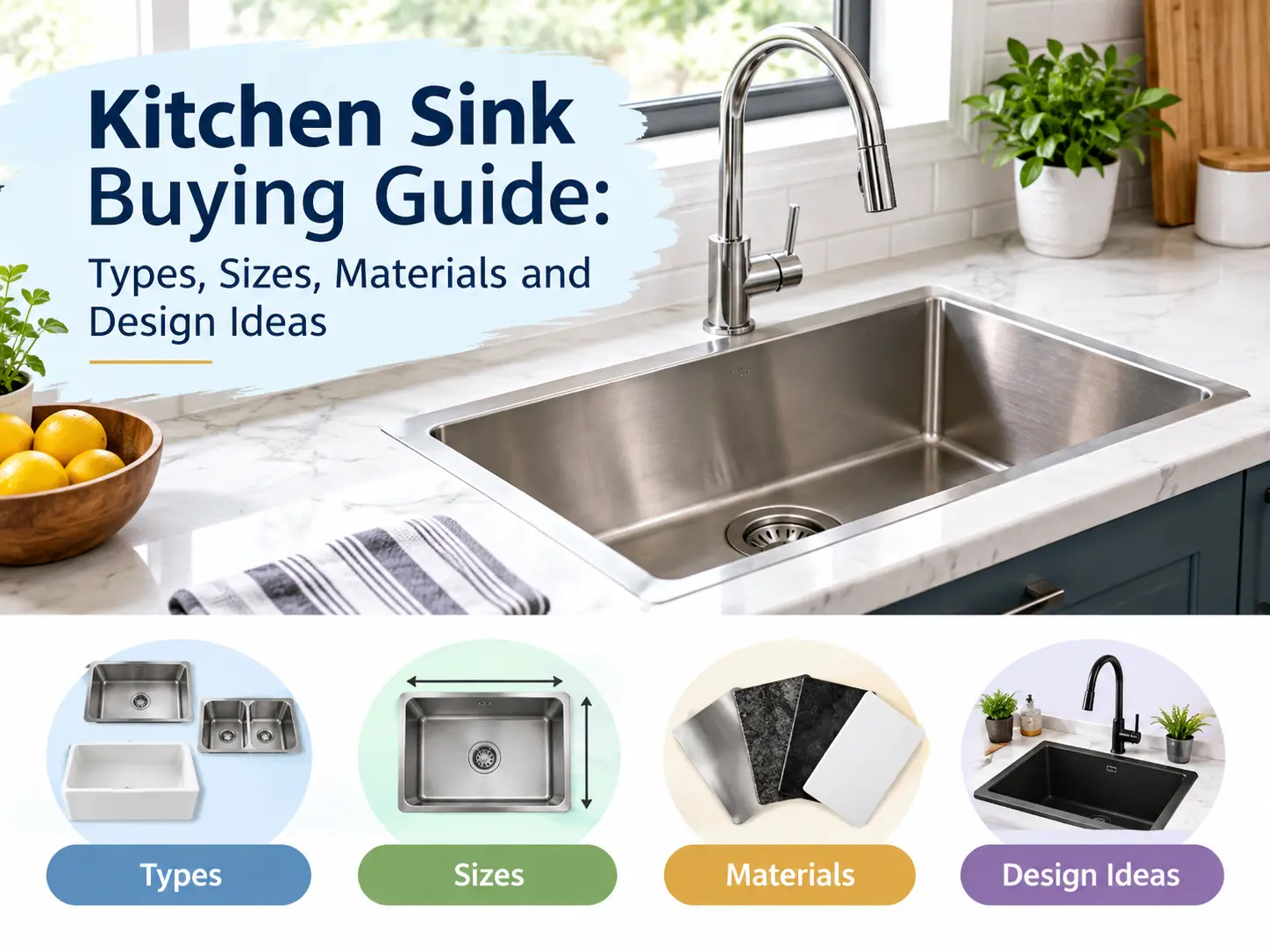
A kitchen sink is one of the most frequently used features in any home. You use it to wash vegetables, clean dishes, fill cooking pots, rinse utensils, and handle many everyday kitchen tasks. Choosing the right sink can make these activities easier while improving the overall appearance of your kitchen.
However, finding the best kitchen sink involves more than selecting an attractive design. You need to consider the available space, cabinet dimensions, sink material, bowl configuration, installation method, cleaning requirements, and budget.
Some homeowners prefer a simple stainless steel kitchen sink because it is practical and easy to maintain. Others choose a granite composite sink, a ceramic sink, or a modern black kitchen sink to complement their interior design. The right option depends on your cooking habits, kitchen layout, and personal preferences.
This kitchen sink buying guide explains the main types of sinks, compares popular materials, discusses common dimensions, and shares practical tips for choosing a model that suits your home.
What Is a Kitchen Sink?
A kitchen sink is a basin installed in a countertop, kitchen cabinet, or specially designed work area. It provides a dedicated place for washing dishes, rinsing food, filling containers, and cleaning kitchen equipment.
Most kitchen sinks connect to a drainage system and use a faucet to supply water. Some models include additional features such as integrated drainboards, removable drying racks, cutting boards, waste disposals, and accessories that make food preparation more convenient.
Modern sinks are available in different shapes, sizes, finishes, and materials. A compact single-bowl sink may work well in a small apartment, while a large double-bowl model can offer greater flexibility in a busy family kitchen.
When selecting a sink, consider how you actually use your kitchen. A household that regularly prepares large meals may need a deep basin for washing pots and pans. Someone with limited counter space may benefit from a compact design with practical accessories.
Why Choosing the Right Kitchen Sink Matters
A kitchen sink influences both the appearance and functionality of your kitchen. Although it may seem like a small purchasing decision, an unsuitable sink can make everyday cleaning more difficult.
Better everyday functionality
The right sink provides enough room for your usual dishes, cookware, and food preparation tasks. A sufficiently wide and deep basin makes it easier to clean large pans without constantly adjusting their position.
More efficient use of space
Your sink should fit comfortably within your available countertop and cabinetry. Choosing a suitable size helps preserve preparation space and leaves enough room for other kitchen essentials.
Easier cleaning and maintenance
Different materials require different levels of care. Stainless steel is generally straightforward to clean, while some decorative finishes may need more careful maintenance to preserve their appearance.
Improved kitchen appearance
A sink can complement your countertops, cabinets, faucet, and backsplash. The right combination creates a consistent design without sacrificing practicality.
Long-term value
A well-chosen sink can provide years of everyday use. Considering installation requirements, material quality, replacement parts, and warranty terms can help you make a more informed purchasing decision.
Types of Kitchen Sinks
Understanding the different kitchen sink types is an important first step. Each configuration offers specific advantages, so compare your options before choosing a model.
1. Single-Bowl Kitchen Sink
A single-bowl kitchen sink has one large basin without a divider. Its simple design provides an uninterrupted washing area.
This configuration works particularly well for washing large cookware, baking trays, serving dishes, and pressure cookers. It can also suit compact kitchens where a second basin would take up valuable space.
Advantages:
- Provides a large, uninterrupted washing area.
- Accommodates bulky cookware.
- Offers a simple, easy-to-understand layout.
- Works well in many small and medium-sized kitchens.
- Usually requires less space than a comparable double-bowl configuration.
Potential disadvantages:
- Does not provide a separate basin for rinsing.
- Washing and food preparation may compete for the same space.
- Dirty dishes can occupy the entire basin.
A single-bowl kitchen sink is a practical choice if you regularly wash large utensils or prefer a straightforward design.
2. Double-Bowl Kitchen Sink
A double-bowl kitchen sink contains two separate basins. Depending on the model, the bowls may have equal dimensions or one may be larger than the other.
This configuration lets you separate activities. For example, you could wash dishes in one basin and rinse them in the other. You could also reserve one side for food preparation and the other for cleaning.
Advantages:
- Separates washing and rinsing tasks.
- Provides flexibility for busy kitchens.
- Helps organise different kitchen activities.
- Offers convenient options for households that wash dishes by hand.
Potential disadvantages:
- Requires sufficient cabinet and countertop space.
- Individual bowls may be too small for large cookware.
- The divider can limit the usable washing area.
Before choosing a double-bowl kitchen sink, examine the internal dimensions of both basins. A model with two small bowls may be less useful than a spacious single bowl if you regularly clean large pans.
3. Top-Mount Kitchen Sink
A top-mount kitchen sink, also called a drop-in or inset sink, sits inside a countertop opening. Its rim rests on the counter surface.
This installation style is popular because it is relatively straightforward to fit and works with many countertop materials, subject to the manufacturer’s specifications.
Advantages:
- Generally straightforward to install.
- Often suitable for replacement projects.
- Available in numerous sizes and materials.
- Can be a practical option for budget-conscious renovations.
Potential disadvantages:
- The raised rim can collect crumbs and residue.
- The edge may require regular cleaning.
- It creates a more visible boundary between the sink and countertop.
A top-mount sink can be a sensible choice when you want a practical replacement without substantially changing your existing kitchen layout.
4. Undermount Kitchen Sink
An undermount kitchen sink attaches beneath the countertop rather than resting on top of it. This design creates a clean transition between the countertop and the basin.
It is particularly common with suitable stone and solid-surface countertops. The exact installation method depends on the sink, countertop, mounting system, and manufacturer’s instructions.
Advantages:
- Creates a streamlined appearance.
- Makes it convenient to wipe crumbs into the basin.
- Keeps the sink rim off the visible countertop surface.
- Complements many contemporary kitchen designs.
Potential disadvantages:
- Requires careful installation and support.
- May cost more to install than a basic drop-in sink.
- Is not compatible with every countertop material.
- The countertop edge and seal need proper care.
Choose an undermount kitchen sink when you want a clean, modern appearance and your countertop can safely support the installation.
5. Farmhouse Kitchen Sink
A farmhouse kitchen sink, also called an apron-front sink, has a prominent front panel that remains visible after installation.
This design often features a deep basin and a distinctive appearance. It can complement traditional, country-style, rustic, and contemporary kitchens.
Farmhouse sinks are available in materials such as stainless steel, fireclay, and other engineered or natural materials.
Advantages:
- Creates a distinctive visual feature.
- Often offers generous basin capacity.
- Can accommodate large pots and cookware.
- Works with several kitchen design styles.
Potential disadvantages:
- May require specialised cabinetry.
- Can be heavy, depending on the material.
- May involve additional installation work.
- Requires careful planning of the cabinet front and surrounding countertop.
Measure the cabinet carefully before buying a farmhouse kitchen sink. Its dimensions and front-panel design can affect the installation requirements.
6. Corner Kitchen Sink
A corner kitchen sink fits into a corner of the countertop. It can help use an awkward area in kitchens where a conventional sink placement would interfere with other work zones.
Some corner sinks have a single basin, while others offer two bowls arranged at an angle.
Advantages:
- Can make use of otherwise awkward space.
- May create more room along a straight countertop.
- Can suit certain L-shaped kitchen layouts.
Potential disadvantages:
- May provide less convenient access than a centrally positioned sink.
- Can make the surrounding corner cabinet harder to organise.
- Faucet placement and plumbing may need careful planning.
Consider a corner sink only after evaluating your workflow. A layout that saves counter space may not be ideal if it makes washing dishes uncomfortable.
Best Kitchen Sink Materials
The material affects a sink’s durability, appearance, cleaning needs, noise, and price. Before buying, compare the most common options.
Stainless Steel Kitchen Sink
A stainless steel kitchen sink is a widely used option because it combines practical maintenance with a versatile appearance.
Stainless steel is available in different thicknesses, finishes, and quality grades. The specifications matter, so avoid judging two sinks by their appearance alone.
Benefits:
- Generally easy to clean.
- Available in many sizes and configurations.
- Coordinates with numerous faucet finishes.
- Offers a practical balance of durability and cost.
- Handles ordinary kitchen use well when properly specified.
Limitations:
- Can develop visible scratches over time.
- May show water spots or fingerprints.
- Can make noise when water or cookware strikes the basin if sound insulation is limited.
- Quality varies between products.
A brushed or satin finish may help make everyday marks less noticeable than a highly polished surface. Look for clear material specifications, a suitable basin thickness, sound-dampening features, and a reliable warranty.
Granite Composite Kitchen Sink
Granite composite sinks are made from a mixture of mineral material and binding components. Their exact composition varies by manufacturer.
They are popular among homeowners who want a textured appearance and a wider selection of colours than conventional stainless steel usually offers.
Benefits:
- Available in colours such as black, grey, and beige.
- Can complement stone countertops.
- Often has a substantial, premium appearance.
- Many products resist ordinary scratches and stains when properly maintained.
Limitations:
- Can be heavy.
- May cost more than basic stainless steel.
- Some products can chip if struck by heavy cookware.
- Care requirements vary by formulation and finish.
Review the manufacturer’s cleaning instructions before purchasing a granite composite kitchen sink. Do not assume that every product has the same resistance to heat, stains, or impact.
Ceramic and Fireclay Kitchen Sinks
Ceramic and fireclay sinks provide a smooth, often glossy surface that suits traditional and contemporary interiors.
Fireclay sinks are made through a specialised manufacturing process, while ceramic sinks can include different types of fired materials. Product specifications therefore matter.
Benefits:
- Offers a clean, decorative finish.
- Complements traditional and farmhouse designs.
- Is generally easy to wipe clean.
- Can provide a bright appearance in kitchens with light-coloured cabinets.
Limitations:
- Can be heavy.
- May chip or crack under certain impacts.
- Requires appropriate cabinet support.
- May have a higher purchase and installation cost.
Choose ceramic or fireclay if appearance is important and the cabinet can accommodate the sink’s weight.
Quartz Composite Kitchen Sink
Quartz composite sinks use quartz or other mineral components combined with resins or binding materials. The precise formulation differs between manufacturers.
They are available in several colours and can provide a modern, coordinated look.
Benefits:
- Offers a variety of colour options.
- Often has a refined, contemporary appearance.
- Can provide good resistance to everyday wear.
- Coordinates with many engineered-stone countertops.
Limitations:
- Product quality and durability vary.
- Heavy impacts may cause damage.
- Some finishes need special cleaning products.
- Certain models cost more than standard steel sinks.
Check the care guide and warranty conditions, especially if you cook frequently with heavy utensils.
Cast-Iron Kitchen Sink
Cast-iron sinks generally use a cast-iron base covered with a protective enamel finish.
They can create a traditional, substantial appearance and are available in several colours.
Benefits:
- Offers a distinctive design.
- Can complement classic kitchens.
- Provides a smooth enamelled surface.
- May last for many years with suitable care.
Limitations:
- Is very heavy.
- Requires appropriate structural support.
- The enamel can chip if damaged.
- Replacement and installation may be more involved.
Confirm the cabinet’s load capacity and follow the manufacturer’s recommendations for protecting the enamel.
Single Bowl vs Double Bowl Kitchen Sink
The best configuration depends on your kitchen size, cooking habits, and cleaning routine.
A single-bowl sink offers more uninterrupted space. It is especially useful when you wash large cookware or want to keep the sink design simple.
A double-bowl sink provides separate work areas. It can be useful when one person washes dishes while another prepares ingredients or when you want to separate washing and rinsing.
Consider these questions before making your choice:
- Do you regularly wash large pots, pans, and baking trays?
- Do you wash dishes by hand or use a dishwasher?
- How much cabinet space is available?
- Do you need separate areas for food preparation and cleaning?
- Would a second bowl reduce the size of the main washing area too much?
If you regularly handle large cookware, start by comparing spacious single-bowl models. If separate washing and rinsing areas are more important, examine double-bowl options with practical internal dimensions.
Neither design is automatically better. The right choice is the one that supports your daily routine.
Kitchen Sink Sizes and Measurements
Choosing the correct kitchen sink size is essential for a successful installation. A sink that looks suitable in a photograph may not fit your cabinet or leave enough room for plumbing.
Many residential sinks fall within a broad range of sizes. For example, products around 24 to 25 inches may suit compact layouts, while models around 30 to 33 inches are common options for larger kitchen work areas. Exact dimensions vary by design and market.
Always check the product’s technical drawing rather than relying on a general size recommendation.
How to Measure for a Kitchen Sink
1. Measure the cabinet width. Determine the available width inside the cabinet and check the minimum cabinet size specified by the sink manufacturer.
2. Measure the countertop space. Check the total available length and depth, including the area needed for the faucet and any drainboard.
3. Check the bowl dimensions. The external sink measurements do not necessarily reflect the usable internal basin size.
4. Confirm the countertop cut-out. For a replacement, compare the new sink with the existing opening. For a new countertop, use the manufacturer’s approved template.
5. Check the depth. A deeper bowl can accommodate large cookware but may reduce the storage space available below the sink.
6. Inspect the plumbing. Confirm the position of the drain outlet, water pipes, waste fittings, and any water purifier or disposal equipment.
7. Check faucet clearance. Ensure the faucet can turn freely without hitting a wall, window, cabinet, or shelf.
Never cut a countertop based only on a product photograph or an approximate measurement. Confirm the final dimensions with the installation instructions.
Modern Kitchen Sink Design Ideas
A kitchen sink should complement the rest of your kitchen rather than look like an unrelated feature.
Stainless Steel With White Cabinets
A stainless steel kitchen sink pairs well with white cabinets, neutral countertops, and simple hardware. This combination creates a bright and versatile appearance.
It is suitable for kitchens where practicality is more important than a bold decorative statement.
Black Kitchen Sink With Light Countertops
A black kitchen sink can create contrast against white, cream, or light-grey countertops.
Pair it with compatible faucet finishes and check how the material responds to water marks, cleaning products, and daily wear.
Farmhouse Sink With Traditional Cabinets
An apron-front sink can become a central design feature in a kitchen with framed cabinets, natural wood, and classic hardware.
Choose the cabinet design and support system before purchasing the sink.
Undermount Sink With Stone Countertops
An undermount sink can create a streamlined transition with suitable granite, quartz, or other approved countertop materials.
This option suits homeowners who prefer uninterrupted countertop lines and convenient surface cleaning.
Compact Sink for a Small Kitchen
A compact single-bowl sink can preserve valuable preparation space in a small apartment or studio kitchen.
Look for a practical internal basin, sufficient faucet clearance, and useful accessories such as a removable drying rack.
Deep Sink for Busy Family Kitchens
A deep basin may help accommodate larger dishes, cooking pots, and utensils. However, the depth should remain comfortable for the people who use the kitchen regularly.
Kitchen Sink Price: What Affects the Cost?
Kitchen sink prices vary considerably by location, material, brand, dimensions, and installation requirements. A basic stainless steel model can cost much less than a large farmhouse or premium composite sink.
Instead of choosing the cheapest product automatically, compare the total cost of ownership.
Important cost factors include:
- Material: Stainless steel, composite, ceramic, and cast iron have different production and installation costs.
- Size: Larger sinks may require more material and cabinet space.
- Design: Special shapes, apron fronts, and integrated workstations can increase the price.
- Installation: Undermount and specialised installations may require additional labour.
- Accessories: Drainboards, baskets, cutting boards, and custom fittings can add to the overall cost.
- Plumbing changes: Relocating pipes or adjusting the cabinet can increase renovation expenses.
- Warranty: Review what the warranty covers and how long protection lasts.
Ask for a complete quotation that includes the sink, faucet if required, waste fittings, installation labour, and any countertop modifications. This makes it easier to compare different products fairly.
How to Choose the Best Kitchen Sink for Your Home
Use the following steps to narrow your options.
Step 1: Assess Your Kitchen Layout
Start with your available cabinet and countertop dimensions. A sink that does not fit properly can lead to expensive changes.
Step 2: Identify Your Daily Needs
Think about the cookware you wash, the number of people using the kitchen, and whether you have a dishwasher.
Step 3: Select the Bowl Configuration
Compare single-bowl and double-bowl models based on usable space rather than appearance alone.
Step 4: Choose the Material
Select a material that fits your budget, maintenance preferences, and kitchen style. Stainless steel is a practical starting point for many households, but composite and ceramic products may better suit other needs.
Step 5: Decide on the Mounting Style
Check whether you need a top-mount, undermount, farmhouse, or another approved installation type. Your countertop and cabinetry will influence the available choices.
Step 6: Review the Features
Look for useful features such as sound-dampening pads, a convenient drain position, rounded corners, compatible waste fittings, and removable accessories.
Step 7: Compare Specifications and Warranty Terms
Read the technical specifications carefully. Confirm the material, dimensions, installation requirements, included components, and warranty exclusions.
Step 8: Confirm Installation Compatibility
Before placing the order, have a qualified installer verify the cabinet, countertop, plumbing, and mounting requirements.
Kitchen Sink Installation: Important Things to Know
Kitchen sink installation requires careful measurement and proper sealing. Some replacement projects are relatively straightforward, while others involve cutting stone countertops, changing plumbing, or modifying cabinets.
A typical installation involves these stages:
- Inspect the cabinet, countertop, and plumbing.
- Confirm the exact sink model and approved dimensions.
- Prepare the countertop opening if required.
- Fit the mounting hardware or support system.
- Install the sink and apply the specified sealant.
- Connect the faucet and waste fittings.
- Test the water supply and drainage.
- Inspect for leaks and verify that the sink is securely supported.
The process differs by installation type. Heavy sinks and undermount models may need specialised support. Follow the manufacturer’s instructions and use a qualified professional when the job involves structural changes, complex plumbing, or fragile countertops.
Do not assume that a new sink will fit the old opening just because the two models have similar external dimensions.
How to Clean and Maintain a Kitchen Sink
Regular cleaning helps keep your sink hygienic and attractive. The best cleaning method depends on the material.
Daily Cleaning
After preparing food or washing dishes, remove food scraps and rinse the basin. Use a soft cloth or non-abrasive sponge with a suitable cleaner.
Wipe the surrounding area to prevent standing water and residue from building up.
Cleaning a Stainless Steel Kitchen Sink
Use warm water, mild dish soap, and a soft sponge for routine cleaning.
Rinse away the soap and dry the surface with a clean cloth if you want to reduce water spots. Follow the manufacturer’s recommendations for removing stubborn marks.
Avoid steel wool, harsh abrasives, and cleaning products that can damage the finish. Do not mix cleaning chemicals.
Cleaning a Composite Sink
Use a cleaner approved for the specific composite material. A soft sponge is generally a suitable starting point for routine care.
Avoid strong chemicals or abrasive tools unless the manufacturer explicitly approves them. Different composite formulations may have different limitations.
Cleaning a Ceramic or Fireclay Sink
Use a gentle cleaner and a non-abrasive cloth to protect the surface.
Remove food residue promptly and follow the manufacturer’s guidance for stubborn stains. Avoid impacts from heavy cookware that could chip the finish.
Keeping the Drain Clear
Use a suitable drain strainer to catch food scraps. Remove debris regularly and clean the strainer as needed.
Do not pour cooking oil or grease into the drain. If drainage becomes slow, use a safe cleaning method compatible with your plumbing system and follow the product instructions.
Preventing Scratches and Stains
Avoid dragging heavy or sharp cookware across the sink. Use suitable protective accessories where appropriate.
Do not leave strongly coloured food, acidic substances, or chemical cleaners on the surface longer than recommended by the manufacturer.
Common Kitchen Sink Buying Mistakes
Choosing a Sink Before Measuring
A sink may look attractive online but still be unsuitable for the available cabinet or countertop. Always verify dimensions first.
Ignoring the Internal Bowl Size
Two sinks with similar external dimensions can offer very different usable space. Check the basin measurements before deciding.
Selecting a Material Based Only on Appearance
A beautiful finish may require more maintenance than you prefer. Compare durability, cleaning requirements, and warranty terms.
Overlooking the Faucet
The faucet must match the sink or countertop installation. Check the mounting holes, reach, height, water connections, and clearance.
Forgetting Under-Sink Storage
The drain and waste fittings occupy space below the basin. Make sure there is room for the plumbing and any items you plan to store.
Ignoring Noise and Vibration
Some steel sinks can sound noisy when water or dishes hit the basin. Sound-dampening pads or suitable undercoating may improve the experience.
Choosing a Very Deep Sink Without Testing Comfort
A deep sink offers extra capacity but may make prolonged washing uncomfortable for some people. Consider the height of the users and the countertop.
Skipping the Installation Instructions
Incorrect mounting, inadequate support, or poor sealing can cause problems. Confirm compatibility before the countertop is cut or the sink is ordered.
Frequently Asked Questions About Kitchen Sinks
Which kitchen sink material is best?
Stainless steel is a practical choice for many homes because it is generally easy to clean and widely available. Granite composite, quartz composite, ceramic, and fireclay may be suitable when you prefer specific colours or design features. The best material depends on your budget, usage, and maintenance preferences.
Is a single-bowl or double-bowl kitchen sink better?
A single bowl provides more uninterrupted room for large cookware. A double bowl offers separate areas for washing and rinsing. Compare your everyday tasks and the available cabinet width before deciding.
What is the standard kitchen sink size?
There is no single size that suits every kitchen. Many residential models fall around 24 to 33 inches in width, with larger and smaller options available. Check the exact product dimensions, minimum cabinet size, and countertop opening requirements.
Are stainless steel kitchen sinks durable?
Good-quality stainless steel sinks can provide long service with appropriate care. Durability depends on the steel specification, construction, finish, installation, and how the sink is used.
Are black kitchen sinks difficult to maintain?
Maintenance depends on the material and finish. Some black sinks may show mineral deposits, soap residue, or light-coloured marks more visibly. Regular cleaning and following the manufacturer’s care instructions can help maintain their appearance.
Is an undermount kitchen sink worth buying?
An undermount sink can provide a streamlined look and make it easier to sweep crumbs into the basin. It is worth considering if your countertop and cabinetry support the installation and you are comfortable with the additional fitting requirements.
How deep should a kitchen sink be?
The appropriate depth depends on the sink design, countertop height, and users’ comfort. Many residential models offer depths around 8 to 10 inches, although other options exist. Compare internal depth and installation height before buying.
How do I choose a kitchen sink for an Indian home?
Consider the size of your cookware, daily cooking frequency, available cabinet space, and maintenance preferences. A spacious single-bowl stainless steel sink can be practical for washing large utensils. A suitable composite model may be appealing if colour and appearance are priorities.
How can I make a small kitchen sink more useful?
Choose a basin that accommodates your most frequently used utensils without taking up too much counter space. Removable drying racks, sink baskets, and compatible accessories can help improve organisation.
What should I check before buying a kitchen sink online?
Review the external and internal dimensions, material specifications, installation type, minimum cabinet width, included fittings, delivery conditions, warranty, and return policy. Confirm the countertop and plumbing compatibility before ordering.
Final Thoughts
Choosing the right kitchen sink requires a balance between function, appearance, durability, and budget. A well-selected model can make everyday cleaning easier while complementing your kitchen design.
Start by measuring the available space and identifying your most common kitchen tasks. Then compare sink materials, bowl configurations, mounting styles, and useful features. Check the technical specifications and installation requirements before making your final decision.
Whether you prefer a stainless steel kitchen sink, a double-bowl model, a farmhouse design, or a modern composite finish, focus on practical requirements rather than appearance alone.
A carefully chosen kitchen sink can serve your household for years while making your kitchen more comfortable and convenient to use.
